Somewhere along the way, a lot of parents got the idea that apologizing to your kids means giving up your authority.
It doesn’t.
You are still the one who makes the rules, sets the boundaries, says no, and occasionally (okay, maybe often) has to deal with a child who is absolutely convinced that you are the worst human being to ever walk the planet because you wouldn’t let them have the thing.
You’re allowed to be the parent.
And you’re also allowed to be wrong.
In fact, your kids need to see you be wrong.
The goal isn’t to raise a kid who never makes a mistake.
The goal is to raise a kid who knows what to do when they do.
Kids Mess Up. That’s No Secret.
Kids mess up. That’s no secret.
Yet somehow, there’s this idea that parents should strive to be the perfect parent.
I call bullshit.
Because if a parent is “perfect,” kids don’t get to learn one of the most important life lessons they will need for the rest of their lives:
How to make mistakes.
How to own them.
How to move forward from them.
How to grow from them.
When kids grow up believing that the adults around them don’t make mistakes—or worse, don’t admit to them—they can internalize some pretty detrimental messages about themselves and the world:

If I hurt someone, I’m a bad person.
If I screw up, I need to hide it.
If I hurt someone, I may be rejected or abandoned.
If I mess up, I need to defend myself.
If I can’t do something perfectly, I shouldn’t do it at all.
That’s how shame, defensiveness, anxiety, resentment, and perfectionism can become part of their inner narrative, their self-worth, and their future relationships.
But the “today problem” for parents looks like power struggles.
When a parent insists they are right because “I’m the parent,” we’re teaching our kids that their experience doesn’t matter simply because we’re the adult.
They may feel:
Unheard.
Misunderstood.
Unimportant.
Rejected.
Unworthy.
Unlovable.
And those feelings don’t get any smaller just because the argument is over. In fact, they can grow even deeper when there isn’t any resolution to them.
Age Matters
When a very young child repeatedly learns that the parent is right, the child is wrong, and the child’s feelings don’t matter, they’re not necessarily equipped to question that narrative.
They’re kids.
So “I’m wrong. Mom is right.” can become:
“My feelings are wrong.”
“I shouldn’t question adults.”
“If someone is angry with me, I must have done something wrong.”
And those messages can stick around for a very, very long time—and can impact their adult relationships.
See also: Intergenerational Patterns: The Things We Say to Our Children Become Their Inner Voice
Respecting your child’s emotions doesn’t mean agreeing with them about everything. It means allowing them to have an experience that is different from yours without immediately dismissing, correcting, or overpowering it.
When we acknowledge our mistakes, we’re not just modeling how to apologize. We’re giving our kids permission to trust their own experience.
You can be upset with me.
You can disagree with me.
You can tell me when I hurt you.
And I can still be your parent.
Apologizing gives you an opportunity to build mutual respect instead of getting pulled into a power struggle.
See also: Raising Competent Adults: Emotional Respect
You’re showing your child that respect isn’t something that only flows upward because you’re the parent. It’s something that exists simply because they are human beings, not because they are old enough to have their own thoughts, feelings, and opinions.
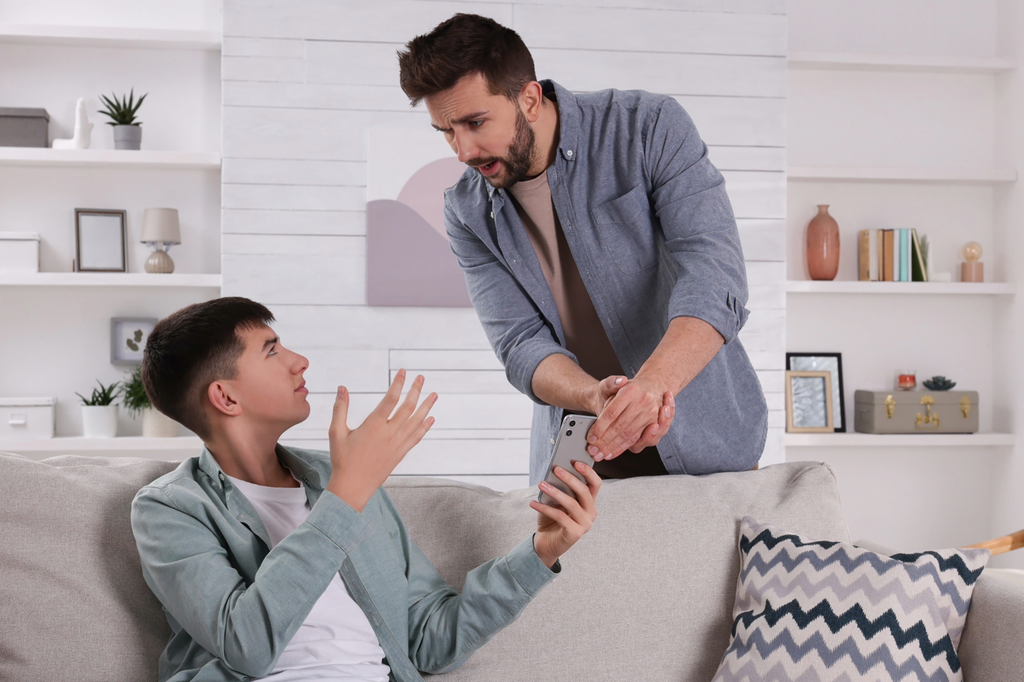
An environment of mutual respect becomes really useful when they become teenagers.
Because the goal isn’t to have a teenager who blindly obeys you because you have the power to cancel their social life.
See also: Raising Competent Adults: Natural Consequences
The goal is to have a teenager who can disagree with you, tell you when they’re angry, recognize when you’ve gotten something wrong, and still have enough respect for you—and for themselves—to work through the conflict.
That’s not giving up your authority.
That’s building an adult who:
- Believes their feelings matter.
- Knows their voice matters.
- Knows their worth.
- Doesn’t settle for disrespectful relationships.
Bonus: You’re raising a teenager who can come to you when they’ve messed up instead of hiding it from you because they’re afraid you’ll punish them rather than help them figure out how to repair the situation.
Love and Anger Can Coexist
Kids can be pretty black-and-white about relationships.
Mom is angry with me, so Mom doesn’t like me.
Dad is disappointed in me. I’m not good enough.
I made a mistake, so I’ve ruined everything.
When parents take responsibility for their mistakes—like yelling at their kid because they can’t find their shoes for the eleven-teenth time—they learn that love and anger can exist at the same time.
You can be angry with someone and still love them.
You can be hurt by someone and still love them.
You can be disappointed in someone’s choices without deciding that they are a disappointment.
Kids need to know that their mistakes don’t define them as human beings.
But what if they learn something different?
What if they learn what to do when they make mistakes?
What if they learn that anger, hurt, and disappointment aren’t the problem?
It’s what we do with those feelings that matters.
You can be angry and still be respectful.
You can be angry and still have boundaries.
You can be angry and still listen.
You can be angry with their behavior and still apologize when you’ve handled it badly.
How to Own Mistakes: What Accountability Looks Like
Okay, so you messed up. You know it. You feel guilty for yelling at them about the shoe situation.
This is a teaching moment.
This is where kids learn what happens after the mistake.
Saying “I’m sorry.” is only the beginning.
Accountability means being able to look at your own behavior and say, “Yep. I messed up.”
No excuses.
No shifting the blame.
No “I’m sorry, but…”
And definitely no turning your apology into a lecture about what the other person did wrong.
You were running late.
You were frustrated.
You snapped.
It happens.

So… own it.
See also: Words Matter: Making a REAL Apology
You can say:
“I’m sorry I yelled at you. I was frustrated and that wasn’t okay.”
And then comes the part that matters most:
Do something differently next time.
Accountability isn’t about beating yourself up.
It’s not making your kid reassure you that you’re a good parent.
And it’s not expecting forgiveness on demand.
It’s recognizing your part, repairing what you can, and making an effort not to repeat the same behavior.
See also: Attachment Breakdown: Why our relationships are the way they are
That’s what you want your kid to learn.
“I can screw up.”
“I can admit when I’m wrong.”
“I can make things right.”
“I can learn from what happened.”
And maybe most importantly:
“Being accountable doesn’t make me less worthy of love.”
Because someday, your kid is going to need to know how to do all of this without you standing next to them telling them what to say.
That’s the whole point.
You’re raising an adult who knows how to take responsibility for their life — mistakes and all.