Parents have ONE job:
To raise competent, confident, functional adults who can survive in the wild.
And emotional respect is one of the earliest — and most important — building blocks of that competence. Because even if some of the other steps are missed, having emotion regulation skills will help them cope, connect, and recover from those missed steps.
And emotion regulation starts with emotionally respectful adults.
What is emotional respect? Let’s dig in.

Starting Early
Kids don’t magically get feelings the day they turn 18. They don’t suddenly develop emotional complexity at 12, 15, or 17. They don’t wake up one morning and think, “Ah yes, now I shall begin having human emotions.”
The emotional centers of the human brain are fully developed before they take their first breath. Even newborns experience real, valid human emotions. Ask any mother — babies have different cries for hunger, fatigue, discomfort, loneliness, and frustration.
Yes, even the tiniest humans feel anger, fear, sadness, overwhelm, and all of the other emotions full-grown adults feel. But infants and toddlers don’t have words for what they’re feeling. All they can do is kick, scream, cry, or throw themselves on the floor — and it’s up to the adults to figure out what they need. Ignoring their feelings or letting them “cry-it-out” teaches them early — I’m on my own.
Until a child can put words to their emotions, their body and vocal cords are their only communication tools. It’s the adult’s job to help them co‑regulate.
Co-regulate?
Co‑regulation is the act of matching another person’s emotional energy. If you stay calm, it helps them settle. If you get dysregulated — so will they. (This goes for adult disagreements too!)
This ONE skill will serve you well as they grow older, especially in the teen years. And this ONE skill is what helps them:
- self-regulate big emotions
- communicate their needs
- express feelings without melting down
- emotionally connect with others
- build healthier romantic relationships
- become regulated parents for their own children
Co-regulation is the foundation of emotional respect.
What to do:
Take a breath. Calm yourself. Notice that you are having your own emotions, but so is the child. Maybe even just hold them while you both cry.
Emotional Respect vs. Disrespect
Emotional respect is simply — Empathy.

It is that act of respecting their feelings as valid, even if you feel differently, even if their emotions are based on misperceptions, even if they lack the empathy or maturity to see your side.
Many parents don’t recognize emotional disrespect because it’s what they grew up with.
Here are common phrases parents say, and what children learn from them:
“Stop crying.” ➔ Keep your feelings to yourself.
“Get over it.” ➔ Your feelings don’t matter.
“You’re fine.” ➔ Your feelings are invalid and wrong.
“Quit mouthing off.” ➔ Don’t express yourself.
Did your parents ever say these things to you? How did you feel? Were those feelings real, or theoretical?
Your child feels the same. Their feelings are not theoretical. They are just as real as yours were.
And when a child’s feelings are ignored or chastised, they learn they must stuff down the feelings they had in the first place and the fear, shame, and hurt created by your reaction.
That’s not emotional regulation.
That’s emotional suppression.
Think about your own relationships.
If your partner said, “If you don’t stop crying, I’m going to give you something to cry about,” you’d feel threatened, unsafe, ashamed, and furious. You wouldn’t feel loved. You wouldn’t feel respected. You wouldn’t feel emotionally safe.
Children feel the same — but they don’t know your words are disrespectful. They take them literally and quickly learn not to challenge them.
Suppressed emotions don’t disappear. They resurface later as anxiety, shutdown, anger, people‑pleasing, perfectionism, or emotional avoidance. (Sound familiar?)
Why Emotional Respect Can Be So Hard
Here’s an uncomfortable truth:
Most parents aren’t reacting to their child’s feelings — they’re reacting to their own.
If you grew up in a home where emotions were punished, mocked, ignored, minimized, or treated as disrespect, you learned to stuff your own emotions down to avoid consequences. As a result, you now carry the anxiety, shutdown, and emotional avoidance that come from emotional suppression.
So when your child cries, melts down, gets overwhelmed, or expresses anger, your nervous system gets triggered. You feel anxious, irritated, helpless, ashamed, or overwhelmed. And to alleviate your own discomfort, you shut down theirs.
Suddenly, you’re saying disrespectful things you would never say to another adult.
Emotional disrespect is an intergenerational pattern that gets passed down from generation to generation, until someone breaks the cycle.
What to do instead
If your child is an infant or toddler, emotional respect looks like meeting their needs. If you know what they want or need — and it’s reasonable to do so — then do it. Yes, it may be inconvenient. But if it isn’t going to cause any tangible problems, honor their needs. This teaches them that their feelings matter.
And when what they want simply isn’t reasonable or realistic? Hold them. Sit with them. Let them have their feelings while you take your own breath and settle yourself. If they’ve thrown themselves on the floor, sit next to them. You don’t have to fix it — you just have to show up. This teaches them that when their emotions feel overwhelming, you will be there to help them regulate, not punish them for having the feelings in the first place.
If your child is preschool or early elementary age, emotional respect looks like helping them find the words for what they’re feeling. Early on, you’ll need to name those feelings for them: “I know it’s sad when we have to leave the park.” Just like learning any other vocabulary, children learn to connect that “thing” they’re feeling in their body to the words you’re saying.
Teach them healthy ways to express those feelings. Correct unhealthy expression by offering a healthier alternative: “It’s okay to be angry, but it’s not okay to hit people. Let’s stomp it out instead.” You’re not shutting down the emotion — you’re guiding the expression.
And sometimes? Just let them have their feelings. Feelings don’t need to be fixed. Sometimes sitting with them while they cry about a broken toy is all they need. They don’t need a new toy or a distraction. They just need you to acknowledge their loss with them.
Eventually, they’ll be able to name those feelings on their own — and that is the beginning of healthy emotional expression. And it starts with a parent who allows space for those feelings to exist.
Doing this work now will make the teen years SO much easier — for everyone. But more importantly, it sets the stage for them to have healthy adult relationships where they can comfortably communicate uncomfortable emotions.
When the Child is Right

Here’s something parents rarely want to admit: Sometimes the child is right.
Parents often get even angrier when their child “talks back” because the child is naming something the parent doesn’t want to look at:
“You’re not being fair.”
“You won’t listen.”
“You’re yelling at me for no reason.”
“You don’t care how I feel.”
And they’re not wrong.
Having a child call you out on your own poor behavior is really uncomfortable. The solution? Shut the child down.
But when you punish a child for telling the truth, you teach them to stop telling the truth. You teach them that honesty is dangerous, that their voice creates conflict, and that silence keeps them safe.
What to do instead
When your child is right — when they call out your tone, your unfairness, your inconsistency, or your behavior — own it.
Admit when you’re wrong. Show them what accountability looks like. Let them see that it’s okay to be human, to make human mistakes, and to repair those mistakes with a genuine apology instead of defensiveness.
You don’t lose authority by apologizing. You gain respect.
A child who sees a parent take responsibility learns:
- that truth isn’t dangerous
- that honesty isn’t punished
- that relationships can recover
- that conflict doesn’t mean disconnection
- that accountability is normal, not shameful
And they learn that their voice matters — even when it’s uncomfortable.
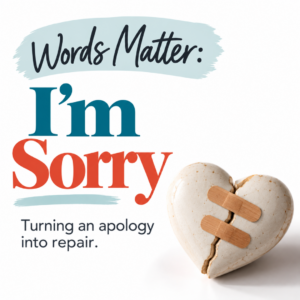
One of the most powerful things you can say to your child is, “I’m sorry.”
Not the performative version.
Not the “I’m sorry you feel that way.”
Not the “I’m sorry, but…”
A real apology:
“I shouldn’t have yelled. I’m sorry.”
“You’re right — I wasn’t being fair.”
“I didn’t listen, and that wasn’t okay.”
“Thank you for telling me. I’ll do better.”
This teaches them that repair is possible, that relationships can withstand honesty, and that speaking up leads to connection — not punishment.
And when a child learns that truth leads to repair instead of fear, they grow into adults who can:
- advocate for themselves
- communicate clearly
- set boundaries
- disagree respectfully
- stay connected during conflict
- trust their own voice
This is emotional respect in action.
“Because I said so.” and “Don’t talk back.”
These two phrases deserve their own spotlight because they don’t just shut down childhood emotions — they are dangerous.
“Because I said so” doesn’t teach respect. It teaches obedience without understanding.
“Don’t talk back” doesn’t teach communication. It teaches silence over self‑expression.
Children who learn compliance over self‑advocacy grow into adults who can’t stand up for themselves.
- They freeze when challenged.
- They avoid conflict.
- They shrink themselves in relationships.
- They apologize for having needs.
- They believe their voice is dangerous.
- They stay small to stay safe.
They weren’t taught communication.
They were taught silence.
The Hidden (and Very Dangerous) Cost
This isn’t the focus of the post, but if you take nothing away from this post, hear this:
When a child learns compliance over self‑advocacy, it doesn’t just affect their confidence.
It affects their physical safety.
A child who has been taught:
“Do what you’re told.”
“Don’t talk back.”
“I don’t want to hear it.”
“Quit complaining.”
“Stop crying.”
“You’re fine.”
“Get over it.”

…learns that using their voice is dangerous.
When someone touches them inappropriately?
They freeze.
They stay quiet.
They assume no one will listen.
They assume no one will care.
They assume they will get in trouble for “complaining.”
A child who is punished for speaking up becomes an adult who doesn’t know how.
So Now What?
It is the parent’s job to teach their child
How to name their emotions
How to regulate their emotions.
How to communicate their emotions in a healthy way.
If a child can do these things, they will be well on their way to being emotionally self-aware adults who can cope with life’s challenges and maintain healthy adult relationships.
But what if you don’t know how?
Fair enough. Your parents probably didn’t teach you these things because they didn’t know how either.
For many parents, they need their own counseling to learn how to address the emotional disrespect they experienced themselves.
But let’s start here:
Be the Parent You Wish You Had
One of the most powerful tools I use with parents who are working through their own trauma — or simply want to be better parents than they had — is this:
Be the parent you wish you had.
The parent who listens.
The parent who pauses.
The parent who regulates.
The parent who apologizes.
The parent who explains.
The parent who connects.
The parent who repairs.
The parent who doesn’t punish emotions.
The parent who doesn’t fear honesty.
The parent who doesn’t confuse autonomy with disrespect.

Be the parent who raises a child who grows into an adult who can speak up, set boundaries, advocate for themselves, disagree respectfully, trust their own voice, and stay connected instead of shutting down.
Because competent adults aren’t built through control.
They’re built through emotional respect.