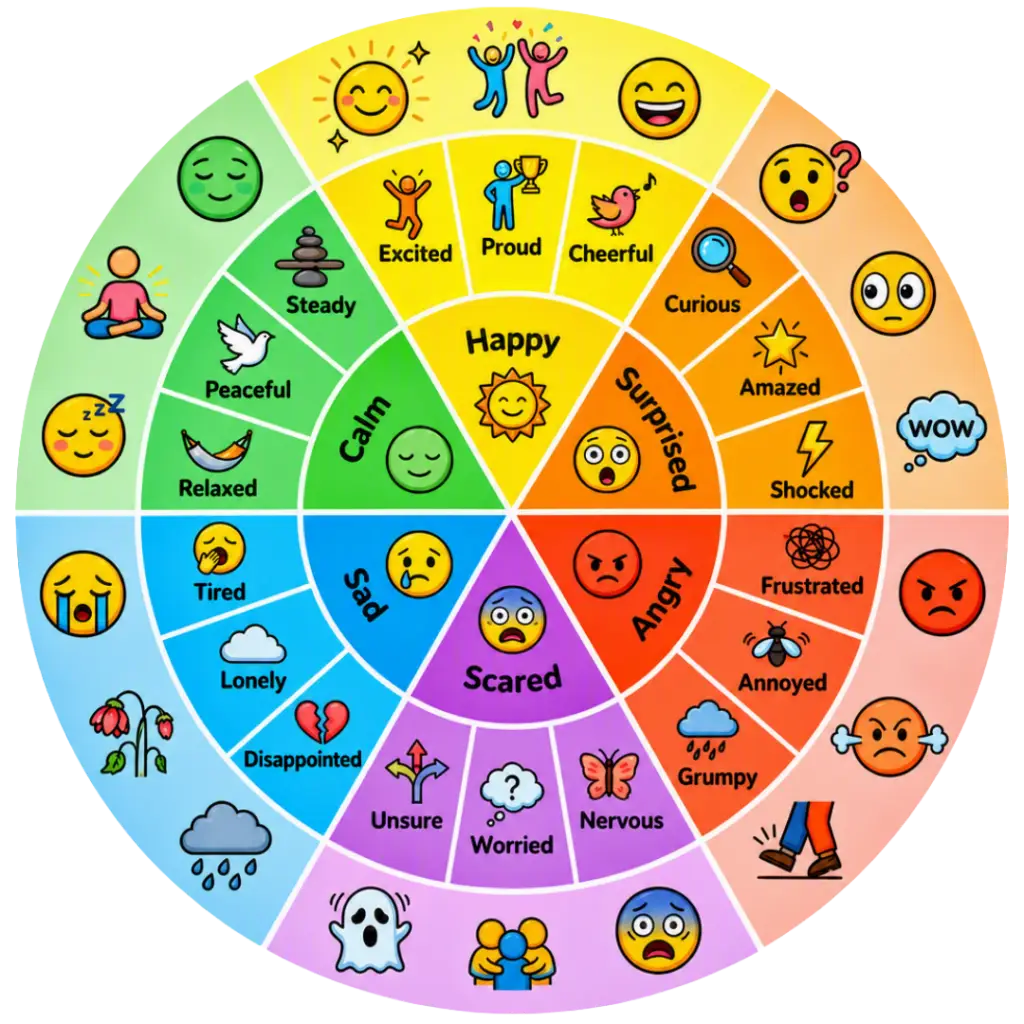
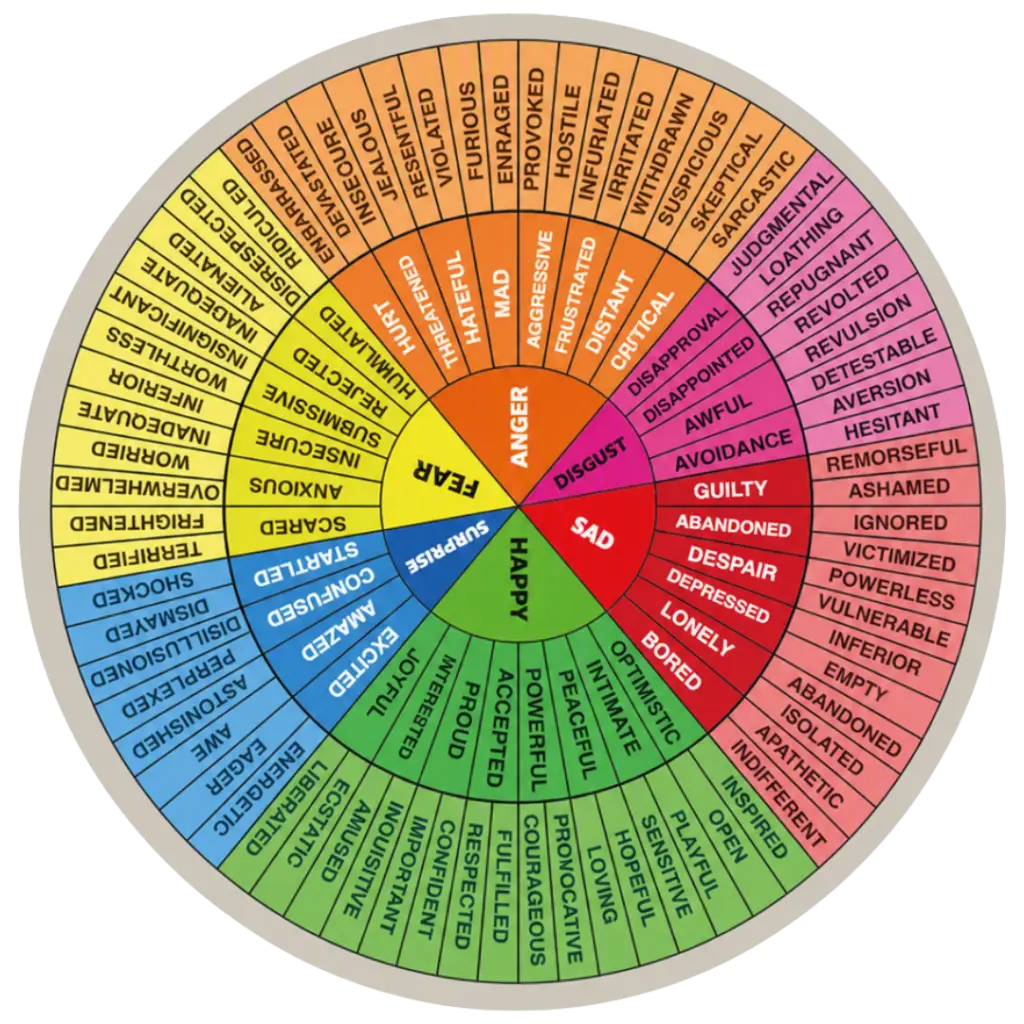
If you’ve ever been to therapy with me, there’s a pretty good chance you’ve met The Feelings Wheel.
In fact, it’s such a regular part of my practice that I have it as a centerpiece on the coffee table in my office.
I usually introduce The Feelings Wheel to my clients very early on. Why? Well…that’s sort of the reason they’re there.
Most people can name maybe three emotions off the top of their head: happy, sad, mad. Maybe “annoyed” if they’re feeling fancy.
Okay, I lied. Usually when I ask someone how they’re feeling, they usually have one of three responses:
“Fine.”
No.
“Pissed off.”
Nope.
“Tired.”
Also nope.
Why?
Because none of those are an emotion.
Meet: The Feelings Wheel.
Therapy requires nuance. It requires specificity. It requires knowing the difference between frustrated, overwhelmed, disappointed, and resentful — because each one tells a different story.
“Fine” tells me almost nothing about what’s happening inside you.
“Pissed off” is usually an umbrella covering something much more specific
And “tired?” That’s code for “I’m so overwhelmed, my nervous system is on fire, and I don’t even know where to begin.” (but that’s a different post).
Are you feeling hurt? Rejected? Betrayed? Frustrated? Inadequate? Embarrassed? Powerless?
The problem isn’t that you don’t have feelings. The problem is that you may never have actually stopped long enough to notice them.
And you can’t heal the feelings without knowing their names.
Let’s Drill Down
For most of my clients, it goes like this:

- Identify at least three emotions you are feeling right now.
- Identify what part of the situation is creating each emotion.
- When have you felt this feeling before (outside of the current situation)?
And when I first ask someone to name what it is they’re feeling… About 80% of the time, one of the first emotions they name is:
Vulnerable.
Yep.
That’s kind of the point.
Because sitting down and intentionally asking yourself, “What am I actually feeling right now?” can feel incredibly vulnerable.
So let’s drill down on that…. (yeah, I actually say that).
What part of this exercise feels “vulnerable?”
Common answers:
“I’ve never done this before.”
“I don’t want to say the wrong thing.”
“You might ask me questions.” (They’re not wrong.)
Fair enough.
When have you had this particular kind of feeling before?
A large majority of the time, the client has some kind of history (in childhood or as an adult) where expressing their feelings was a bad idea. It was unsafe. It would lead to ridicule, dismissiveness, or worse…ignored.
So yeah… me asking them to name an emotion?
Vulnerable.
They’ve never been allowed to express their feelings.
They’re afraid they’ll get in trouble for saying the wrong thing.
They may have to explain or defend themselves for feeling that way.
And that, my friend… is why they’re in therapy.
If you can drill down into whatever it is you’re feeling, you’ll often find that the current situation is touching an older wound, pattern, or experience.
Rank That Emotion
Sometimes we’ll rank the emotions from biggest to smallest.
Other times we’ll give each one an intensity rating from 1–10.
Because “angry” at a 2 is a very different experience from “angry” at a 9.
Anything above a 5 probably needs to be drilled down on.
Achievement Unlocked
My clients have a very… complicated relationship with it. (Yeah, sure… we’ll go with “complicated.”)
The first time I ask a client to name their feelings, they feel vulnerable, so we focus on that.
The next time, they’ll glance down at it, then look away, hoping it will just go away if they ignore it long enough.
Then the progression goes kinda like this:
“Seriously? Again?”
“Please no, not the feelings wheel!”
“Ugh. You and your stupid wheel.”
And then… it’s just death glares that scream “I would rather eat glass than use this damn feelings wheel.”
And then…
The magic happens.
They start naming their feelings spontaneously.
Without prompting.
Without the wheel in front of them.
Without me giving them “the therapist look.”
BOOM.
Achievement unlocked.

Will Bribe for Feelings
With teens, sometimes we turn the whole thing into a game.
- One point for spontaneously naming an emotion in the center ring.
- Two points for the middle ring.
- Three points for the outer ring.
Ten points earns the good candy.
(Yes, therapy sometimes involves bribery. I’m okay with it. 😂)
Homework: The DIY Feelings Wheel
Most clients leave with a black-and-white copy of the wheel and these instructions:
- Put it in a sheet protector
- Use a dry-erase marker
- Highlight your feelings
- Drill down on them at home
It’s simple.
It’s grounding.
And, apparently, surprisingly effective.
It turns emotional awareness into a daily habit instead of a once-a-week therapy exercise.
Want to try it yourself?
I’ve made downloadable Feelings Wheels for both adults and kids that you can use at home. Print one, put it in a sheet protector, grab a dry-erase marker, and give it a try.
Got Kids?
Teaching kids to name and understand their emotions:
- Reduces tantrums and emotional outbursts
- Builds trust in the parent-child relationship
- Helps reduce reactivity during the teen years
- Builds healthier communication skills
- Can reduce vulnerability to unhealthy or abusive relationships as adults
When kids learn that feelings are safe to name, they don’t have to grow up learning to hide them.
(That’s how we start breaking the cycle that brought you to therapy.)