Some families don’t just pass down recipes or traditions — they pass down trauma.
Not because they’re bad people.
Not because they didn’t love their children.
Not because they didn’t try.
They pass it down because trauma changes people at the level of the nervous system, and a dysregulated nervous system can’t magically create a regulated home. When someone grows up in fear, chaos, violence, addiction, or chronic instability, their body learns to live in survival mode. And survival mode becomes the only parenting model they have.
Trauma doesn’t just leave memories — it leaves patterns:
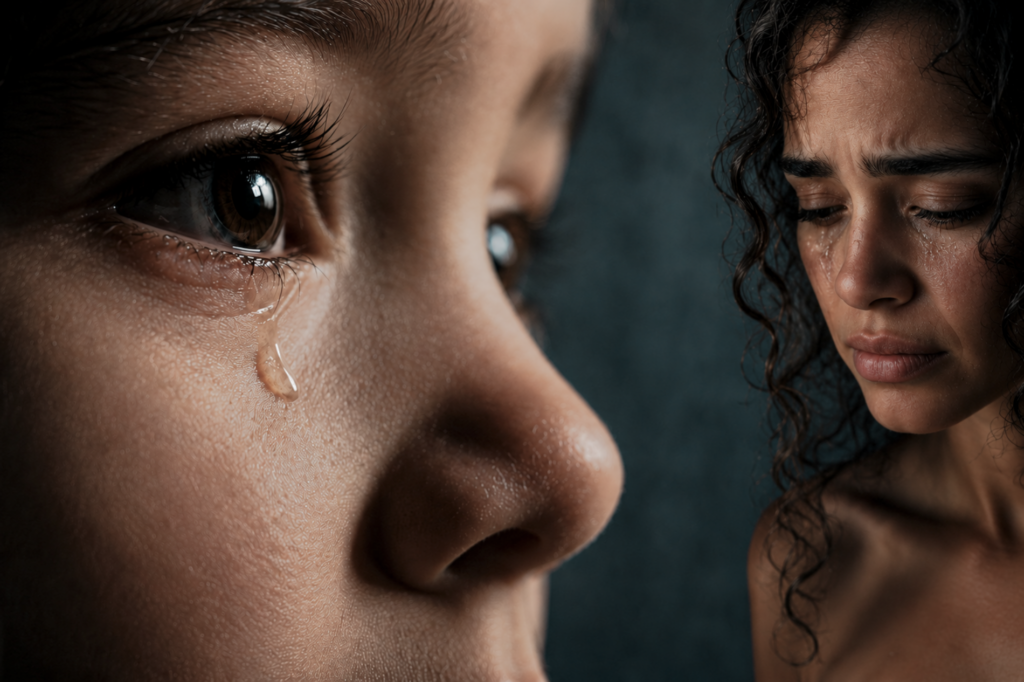
how we communicate
how we cope
patterns in how we react
how we protect ourselves
how we attach
and how we love.
People can only parent from the level of regulation, safety, and self‑awareness they have access to. And if no one ever taught them safety, or modeled emotional regulation, or showed them what healthy love looks like… they’re left trying to build a home with the same tools they grew up with — dysfunctional ones..
This is how trauma moves through generations — not as a single event, but as a legacy of nervous systems doing the best they can with what they’ve lived through.
What Intergenerational Trauma Actually Looks Like
In my last post, I wrote about intergenerational patterns — the everyday messages, tones, and emotional habits that quietly shape a child’s inner world.
But sometimes those patterns don’t stay “patterns.” Sometimes they calcify into something heavier — trauma.
Not the kind you can shrug off.
Not the kind you outgrow.
The kind that alters the trajectory of a family.
- Physical abuse
- Domestic violence
- Sexual abuse
- Addiction and substance misuse
- Chronic emotional neglect
- Unpredictable, explosive, or unsafe caregivers
- Parents who were children themselves when they had children
- Generations of poverty, instability, or survival‑mode living
These aren’t “bad moments.” They’re environments — entire ecosystems of how people relate, communicate, cope, and survive. And that ecosystem shapes a child’s worldview through fear, chaos, secrecy, and instability.
A child growing up in these conditions isn’t just experiencing isolated incidents. They’re learning:
That love hurts.
Connection comes at a cost.
Needs won’t be met.
To shrink, disappear, or perform to stay safe.
And how to read danger before it enters the room.
Trauma doesn’t just affect the person who lived it. When these adaptations become the family’s “normal,” the ecosystem continues.
Not for one generation.
Sometimes not for two.
But for as long as no one has the safety, support, or awareness to interrupt it.
Intergenerational trauma isn’t just the story of what happened.
It’s the story of what the family had to become in order to survive it.
Trauma Doesn’t Stay in the Past — It Becomes Roadmap
Trauma doesn’t end when the event ends.
It settles into the walls of a home.
It becomes the air a child breathes.
And eventually, it becomes the roadmap for how that child learns to live, love, and survive.
When there is physical abuse or domestic violence, children learn quickly that anger isn’t just an emotion — it’s a threat. They track every footstep, every slammed door, every shift in tone. They learn that safety depends on staying small, quiet, and perfect. They learn to read danger before it enters the room.
And later, without meaning to, they may find themselves in relationships where violence feels familiar — either on the receiving end or the delivering end — because their nervous system learned early on that this is what anger looks like, this is what conflict feels like, this is what love costs.
When there is sexual abuse, the trauma doesn’t just live in the event. It lives in the silence that follows — in the excuses, the denial, the way the family looks away, shames, minimizes, or pretends not to know. Children learn that their body is not fully theirs. That boundaries are dangerous. That trust is conditional. That shame is their inheritance.
And that shame grows up with them — shaping their relationships, their sexuality, their sense of worth, their ability to trust, their ability to say no.
When there is addiction, the entire household reorganizes itself around the person using. Children learn that stability is temporary, that promises break, that caretaking earns connection, that chaos is normal. They become the responsible one, the fixer, the emotional sponge, the one who keeps the peace.
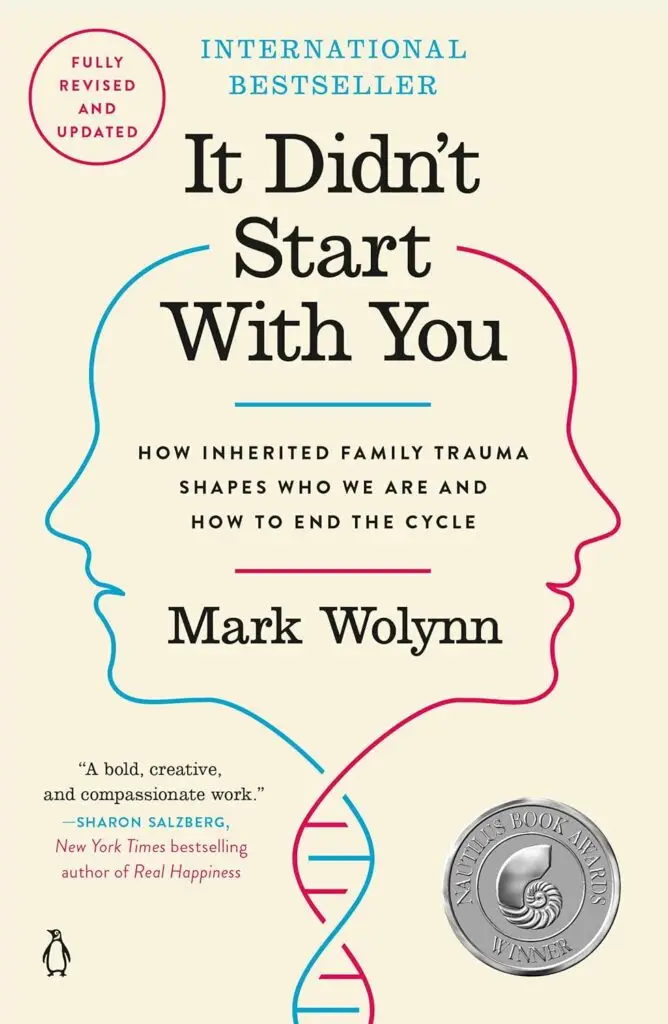
BOOK RECOMMENDATION: If you want to a deeper look at how intergenerational trauma shows up in your life, “It Didn’t Start With You” is an excellent resource, and one I often recommend to my clients.
And as adults, they often repeat the pattern — choosing partners who need rescuing, becoming the rescuer themselves, or struggling with their own substance use because it’s the only coping strategy they ever saw modeled.
And when a family lives in chronic neglect, instability, or survival‑mode, children learn that their needs are too much. That emotions are inconvenient. That vulnerability is unsafe. They grow up self‑reliant to a fault — the child who never asks for help becomes the adult who doesn’t know how.
These patterns don’t stay contained to one generation.
They echo.
Until someone has the safety, support, and awareness to interrupt the pattern, and say, “This is not the life I want my children to inherit.”
And Then There’s the Shame
People who grew up in trauma often carry a quiet, lifelong belief: “Something is wrong with me.”
But the truth is:
- You weren’t “too sensitive.”
- You weren’t “dramatic.”
- You weren’t “difficult.”
- You weren’t “the problem.”
You were a child trying to survive an environment that should have protected you. And now you’re an adult trying to unlearn what your body still believes is “normal.”
That’s not weakness. That’s courage.
Breaking the Cycle of Shame and Blame
There’s a moment in almost every survivor’s story when the trauma itself stops being the loudest part — and the shame takes over.

Shame
It’s quiet.
It doesn’t yell.
Worse… It whispers.
It hides in every corner of their world.
Shame says they should’ve stopped it.
That they should’ve known better.
That they’re the reason it happened.
That they’re damaged, broken, unworthy.
Shame convinces adults that the patterns they’re repeating now — the depression that flattens them, the anxiety that won’t let them rest, the inability to express or tolerate emotions, the chronic fight‑flight‑freeze responses their body still defaults to, even the personality‑level adaptations that once kept them safe — are personal failures instead of the natural echoes of what they lived through.
And then there’s the blame.
Blame
Here’s the thing about blame: It almost never points in the direction it belongs.
People who grew up in trauma rarely blame the adults who hurt them, neglected them, or failed to protect them. They blame themselves.
Not because it makes sense.
Not because it’s true.
But because shame taught them to.
Shame is clever like that.
It doesn’t say, “Someone harmed you.”
It says, “You should’ve stopped it.”
It doesn’t say, “You were a child.”
It says, “You should’ve known better.”
It doesn’t say, “You survived the only way you could.”
It says, “You mess everything up. You’re too much. You’re not good enough.”
So when those old wounds show up in adulthood — the depression that makes it hard to get out of bed, the anxiety that won’t let them rest, the emotional shutdowns, the explosions, the chronic fight‑flight‑freeze responses, even the personality‑level adaptations built around survival — they don’t see those as the echoes of trauma.
They see them as proof that something is wrong with them.
That’s the tragedy of shame: it redirects the blame inward, away from the people who caused the harm, and onto the person who lived through it. They think they’re failing, when in reality, they’re following a map that was drawn long before they were born.
Breaking the Cycle
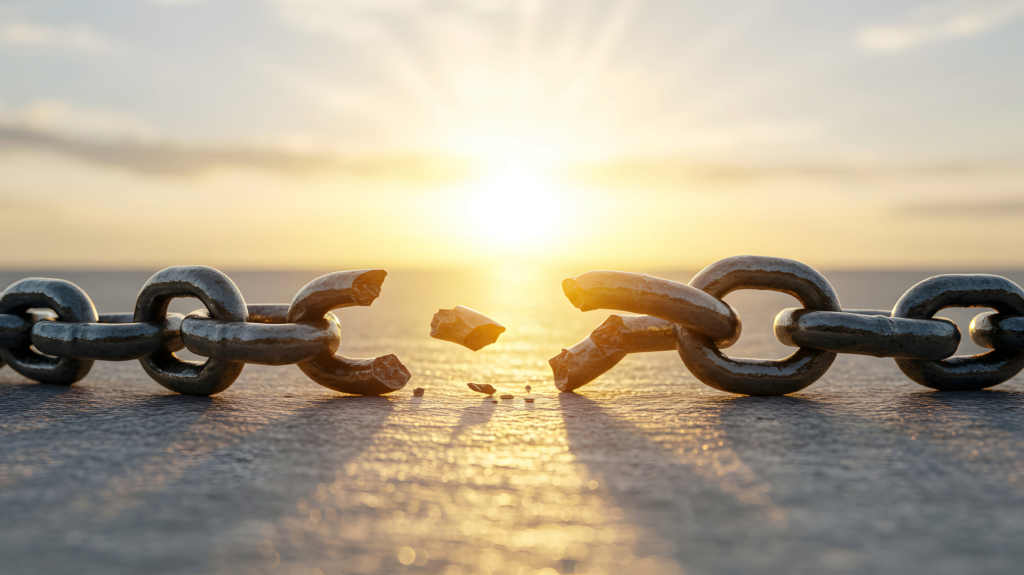
People imagine breaking the cycle as some big dramatic moment — a vow to “never be like them,” a promise to do everything differently. But trauma doesn’t unravel through willpower. And cycles don’t break through perfection.
Cycles break through awareness.
It happens when they figure out that the fear they feel in conflict isn’t about the person in front of them — it’s about the person behind them.
When they recognize the voice in their head isn’t their own — it’s inherited.
When they catch themselves reacting from instinct and pause long enough to ask, “Where did I learn this?”
Cycle‑breaking begins in those tiny moments of clarity — moments where shame loosens its grip and self-blame shifts into understanding and self‑compassion.
Healing cannot happen without self‑compassion — when someone stops asking, “What’s wrong with me?” and replacing it with, “What happened to me — and how is it still showing up?”
And once you can see the pattern, you can interrupt it.
Once you can name the wound, you can tend to it.
Once you understand the blueprint, you can begin to redraw it.
Breaking the cycle isn’t about blaming the generation before you. Most of them were doing the best they could with the tools they had — tools shaped by their own unhealed wounds, their own fear, their own survival strategies. They weren’t given safety. They weren’t given emotion regulation. They weren’t given an example of healthy love. They were simply passing down what they knew.
Breaking the cycle is about giving the generation after you something different to inherit — something safer, something that doesn’t require them to shrink disappear or carry secrets that were never theirs to hold.
And here’s the part no one prepares you for: Healing isn’t linear. And it’s definitely not pretty. It’s what I like to call “beautifully ugly” — the kind of work that cracks you open and rebuilds you at the same time. The kind of work that asks you to sit with the parts of yourself you’ve spent years avoiding. The kind of work that feels messy and raw and disorienting… right up until the moment it doesn’t.
As a therapist, those are the moments I live for. I can hold space for that pain because I know what’s waiting on the other side of it — the release of the shame and fear that has held someone back from living the life they would have had, had they been given the safety and support they deserved.
By choosing to make the beautifully ugly journey of healing, you’re changing the emotional DNA of your entire family line. With each generation, the cycle starts growing upward instead of spiraling downward. When you heal your childhood wounds, you’re not just healing yourself. You’re healing your children. And your grandchildren. And your great‑grandchildren. And every generation that will come after you.
Choosing.
That is where the power is.
A power even bigger than the power that was taken from you.