In case you missed it:
Birth Trauma Breakdown — Part 1: Is it PPD or PTSD?
Trigger Warning: For educational purposes and context, the following section walks through a typical hospital birth in detail. If you’ve experienced birth trauma, read gently, take breaks as needed, or gloss over it entirely.
Let’s walk through what a typical childbirth experience looks like in the United States.
A woman arrives at the labor and delivery unit in labor. She’s taken to a triage room, where a nurse places two elastic belts around her belly to monitor the baby’s heart rate. Her temperature and blood pressure, followed by a cervical exam to see how dilated she is.
If she’s dilated enough (usually 4–6 cm), she’s moved to a labor room, where she’s given a hospital gown, reconnected to monitors, and an IV is started to prevent dehydration — because from this point forward, she cannot eat or drink until her baby is born.

She continues to labor while the nurse asks a bunch of questions about her medical history, medications, allergies, reproductive history, pain level, birth plan, and whether she wants an epidural.
Over the next several hours, contractions become more frequent and more intense. (The average labor is around 12 hours, though I’ve seen them last anywhere from 2 to 60. Around the 24‑hour mark, many women are told they need a cesarean due to “failure to progress.”)
About every two hours, a nurse checks her cervix. She’s expected to dilate at roughly one centimeter per hour. If she isn’t progressing fast enough, Pitocin is often ordered. Pitocin is a synthetic version of oxytocin, the hormone that drives contractions, and also supports bonding, intimacy, and orgasm.
If contractions become too intense, she may ask for — or be offered — an epidural. A tiny catheter is placed into her spinal column, numbing and partially paralyzing her body from the waist down.
She continues to be checked every two hours until she reaches 10 cm and it’s time to push.
Her legs are placed in stirrups, with a bright light pointed toward her so the doctor can monitor her progress. Two or three nurses and a doctor coach her to hold her breath and push as hard as she can while they count down from ten.
After two hours, if she hasn’t delivered, she’s told she needs a cesarean. Common explanations for this are that her pelvis is too small, or her baby is too big.
If she does deliver vaginally, the baby is briefly placed on her chest, then taken to a warmer to be weighed, measured, examined, and vaccinated. Assuming the baby is healthy, the baby is handed back to her while the staff cleans up and leaves the room.
If a cesarean becomes necessary, the experience shifts dramatically.
If her labor stalls or the baby shows signs of distress, she may be told she needs a cesarean. When that happens, everything moves quickly.
She’s taken to the operating room while her partner waits in the hallway. A blue drape is hung above her chest, blocking her view of what’s happening below. Her arms are secured to support boards in a “T” position and secured to prevent contamination of the sterile surgical field.
The anesthesiologist verifies that she is fully numb, while a nurse shaves her pubic area. Once everything is ready, her partner is brought into the room. Within minutes, her baby is lifted out and briefly shown to her before being taken to the warmer to be examined while the doctor closes the incision.
(Note: the cesarean rate in the U.S. is ~37%)
Now read that again — through the eyes of a woman who has experienced sexual abuse or domestic violence.
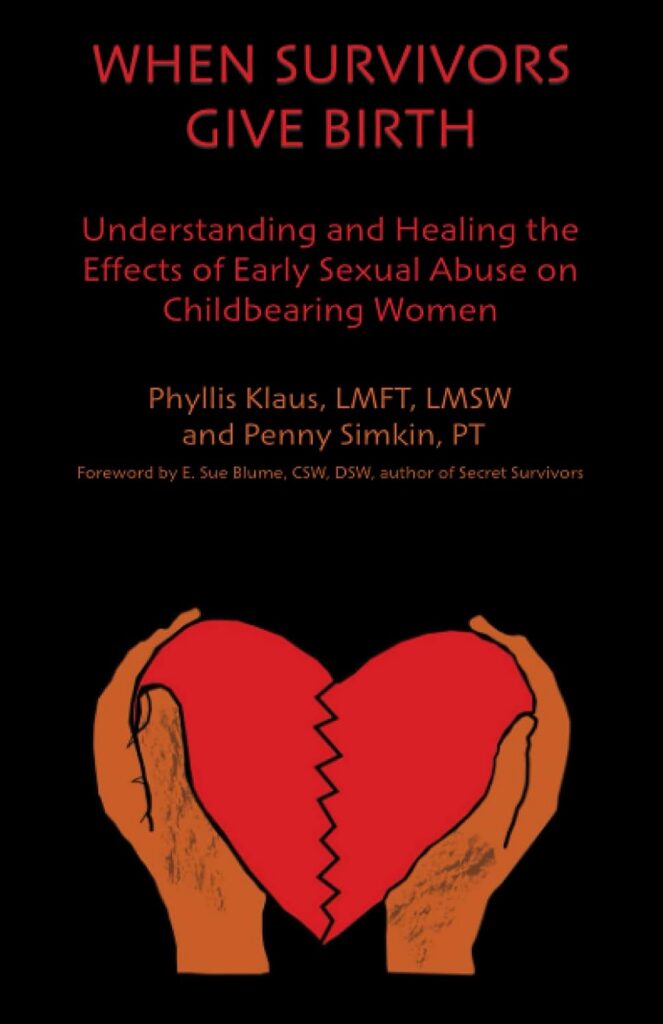
How many moments in that “routine” childbirth experience could feel:
- exposing
- intrusive
- overwhelming
- controlling/disempowering
- frightening
- familiar in the worst possible way
1 in 3 women have experienced childhood sexual abuse. When you include adolescent and adult sexual assault, that number rises to 1 in 2.
Half.
Half of all women.
None of these interventions are designed to harm. But intent doesn’t erase impact — especially for someone whose body has already learned that vulnerability can be dangerous.
For a woman with a trauma history, these “routine” procedures can echo past experiences of:
- powerlessness
- being touched without consent
- “no” not truly being an option (consent via coercion)
- being told to “relax” while something painful is happening
- not being in control of what is happening to own body
- being shamed or criticized
- feeling broken or damaged
And the nervous system responds accordingly.
If you’ve read my PTSD Breakdown post, you know that when the amygdala senses danger — real or perceived — the thinking brain goes offline, and the event may not happen in real time. And when those neuro-responses get activated during birth, the emotional imprint can be deep and long‑lasting.
Birth is already one of the most vulnerable moments of a woman’s life. So when something feels overwhelming, intrusive, or out of control, those fight, flight, or freeze responses can activate instantly.
She’s not weak or broken. Her nervous system is doing exactly what it was designed to do: protect her.
When half of all women walk into birth with a trauma history, birth trauma isn’t a rare exception — it’s a predictable outcome of a system that doesn’t account for the psychological realities of the women giving birth.
How Birth Trauma Can Disrupt Bonding
One of the most painful and least talked about impacts of birth trauma is how it can interfere with early bonding and attachment.
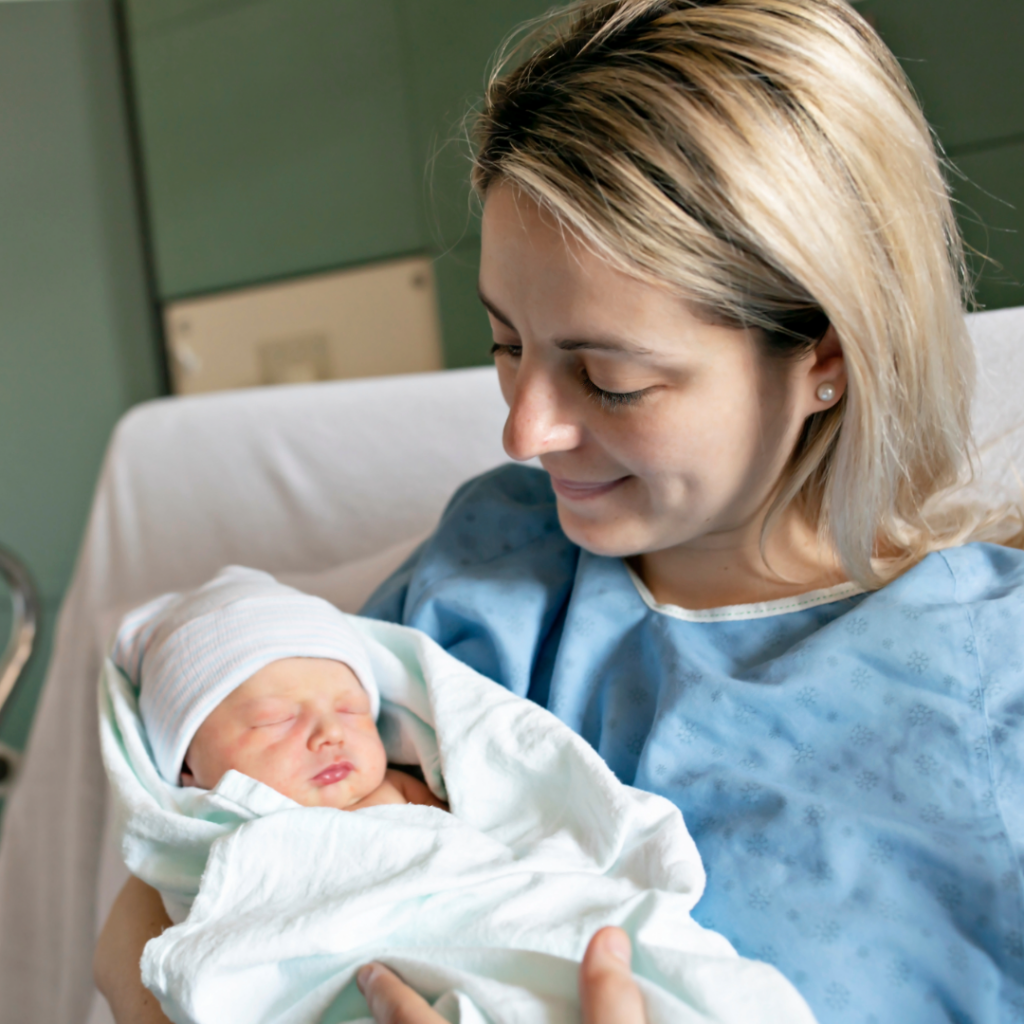
When the body is able to follow its natural hormonal sequence during labor and birth, it releases a massive surge of oxytocin — the highest levels a human will ever experience. The oxytocin high immediately after birth is so intense that researchers compare it to the euphoria produced by heroin. It is nature’s way of ensuring that mother and baby lock onto each other — physically, emotionally, and neurologically.
Neurologically, babies rely on their mother’s nervous system to shape their own. Their sense of safety comes from the caregiver’s ability to be emotionally present, responsive, and regulated enough to help them regulate too. It’s called co-regulation.
Now add prior trauma to the mix.
When the mother is having a trauma response, the fight, flight, or freeze systems dramatically reduce the flow of oxytocin. The brain is in survival mode — and survival mode is not a state where the body prioritizes bonding.
Trauma changes how present, connected, and emotionally available she can feel in those early days. It’s not that she doesn’t love her baby. It’s that her brain is stuck in a trauma response.
After a traumatic birth, many women describe feeling:
- disconnected
- numb
- “far away”
- easily startled
- overwhelmed by crying
- unsure of what their baby needs
- flooded by anxiety or dread
- like they’re going through the motions instead of feeling the connection
If you’ve read my Attachment Breakdown post, you know that attachment isn’t about doing everything perfectly. It’s about attunement — the ability to notice, interpret, and respond to a baby’s cues with enough consistency that the baby feels safe.
But trauma can make attunement and co-regulation harder.
These feelings aren’t signs of failure — and they don’t make you a bad mom. They’re signs of a nervous system still trying to recover from something overwhelming.
Birth trauma doesn’t end when the baby is born. It follows a mother into the days, weeks, and months when she’s expected to bond, connect, and care for a life that depends on her for everything. And when the world meets her pain with minimization instead of understanding, the wound only deepens.
A Resources for Support:
If you’re struggling with your birth experience — or supporting someone who is — the International Cesarean Awareness Network (ICAN) is a supportive, compassionate community available for women processing difficult or traumatic birth experiences. For many women, ICAN is the first place they feel truly heard.
If you are trying to support someone who is struggling after giving birth: Supporting a Mother After a Traumatic Birth