In case you haven’t noticed…
The holidays are coming.
You know. The Holidays.
The season of family, traditions, togetherness, gratitude, joy, and…
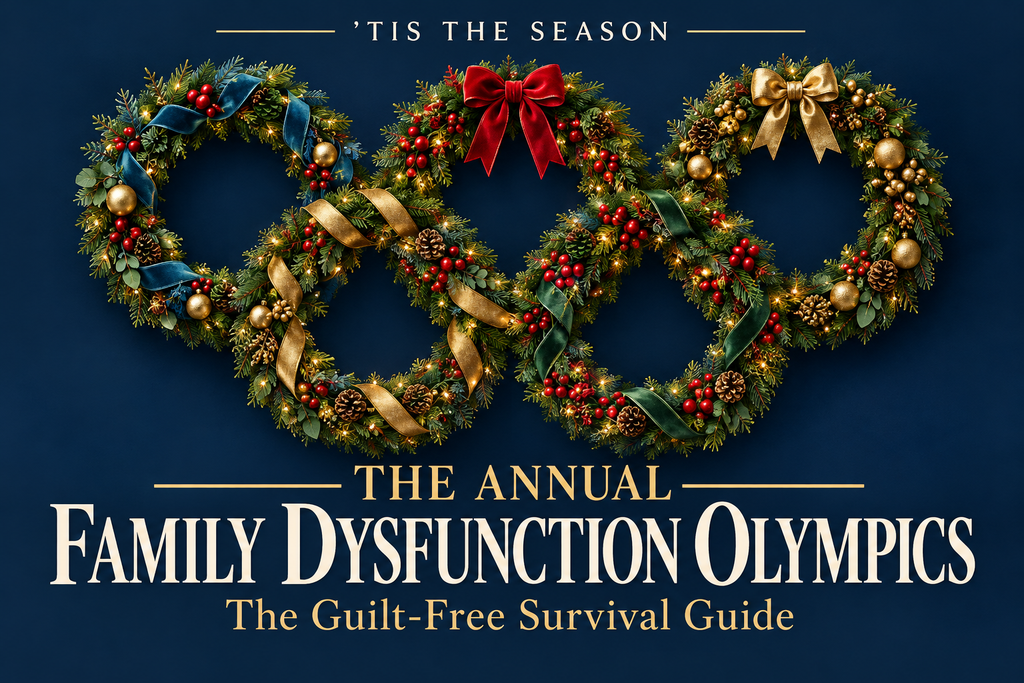
The annual family dysfunction Olympics.
The guilt.
The expectations.
The obligatory visits.
The “but we’re FAMILY.”
The relative you haven’t spoken to in eight months suddenly expects three days of togetherness.
The person who will absolutely make a comment about your parenting/body/marriage/job/kids/life choices before dessert.
When the holiday tradition includes “How long will it take for Aunt Karen to fly off the handle”… it may be time to consider your options. Including the one where… You don’t go.
No, really.
You don’t actually have to go.
But It’s Family…
I know.
That sentence has probably been used to override your boundaries since you were a kid.
But it’s your mother.
But it’s your father.
But it’s your grandmother.
Yes. Yes, they are.
But the kids need to see their cousins.
But we always spend Thanksgiving together.
But what will everyone think?
And maybe the hardest one:
I don’t want them to be mad at me.
Remember last week’s post about other people’s feelings becoming your compass?
Yes, they might get mad.
But that doesn’t automatically mean you’ve done something wrong.
If Thanksgiving means sitting around a table with people who have spent the rest of the year criticizing you, ignoring your boundaries, picking fights, making inappropriate comments, or dragging you back into the same dysfunctional roles you’ve been trying to outgrow…
Maybe the healthiest thing you can do is disappoint somebody.
See also: Why our relationships are the way they are
And Maybe… You Actually Want to Go
Maybe your family is messy but generally safe.
Maybe you genuinely enjoy spending time with them.
Maybe Aunt Karen is worth tolerating because you want to see the rest of the family.
Maybe Thanksgiving with your family is actually (mostly) fun.
Go.
This isn’t about convincing anyone to skip Thanksgiving with their family.
The point is you get to choose.
That’s the part that can get lost when we’ve spent our lives believing that keeping everyone else happy is our job.
You can go because you want to.
You can stay home because you want to.
You can spend Thanksgiving with friends who make you feel safe and loved.
You can eat pie in your pajamas and watch movies all day.
You can even decide that this year, you’re not doing Thanksgiving at all.
And if you decide to go… Great.
But going doesn’t mean you have to surrender your entire holiday to everyone else’s expectations.
You can shorten the trip to minimize your exposure to the dysfunction.
You can get a hotel instead of staying at someone’s house.
You can drive yourself so you aren’t dependent on someone else to decide when it’s time to go.
And you can leave when you’ve had enough.
There is no holiday rulebook that says you have to make yourself miserable in order to prove that you love your family.
You Don’t Actually Have to Go
Setting a boundary doesn’t require a dramatic announcement.
You can simply say:
“We’re not going this year.”
Or:
“We have other plans this year.” (And no, you don’t have to elaborate.)
Or:
“That doesn’t work for us.”
You don’t have to make a family group chat explaining everything you’ve ever been angry about.
You don’t have to convince everyone that your decision is reasonable.
You don’t need their agreement.
And if someone pushes?
Here’s where those people-pleasing habits can sneak back in:
Maybe if I explain it better…
Maybe if I give them enough reasons…
Maybe if I make them understand…
The thing is… You don’t have to build a legal defense for your decision.
You can simply repeat yourself.
Then stop.
You are allowed to make a decision simply because it’s the right decision for you and your family.
But what about the kids?
This one can be harder.
Because we’ve been taught that children need their extended family. And when those relationships with grandparents, aunts, uncles, cousins, and other extended family members are healthy, they can be wonderful.
But being related to someone does not automatically make that relationship healthy.
Kids don’t need to spend Thanksgiving being yelled at.
They don’t need to listen to adults insult each other.
They don’t need to watch someone get drunk and become unpredictable.
They don’t need to be criticized about their body, grades, behavior, personality, or anything else.
They don’t need to sit quietly through inappropriate conversations because “that’s just how Grandma is.”
And they definitely don’t need to learn that being family means tolerating whatever someone does to you.
See also: The Things We Say to Our Children Become Their Inner Voice
Sometimes protecting your kids means saying:
We’re not going.
But what do we tell the kids?
Younger kids may not think much of it at all. You can make other plans and enjoy your holiday.
Older kids might have questions, especially if visiting these relatives has been part of every Thanksgiving they can remember. They may need an explanation for why things are changing.
You don’t have to share every painful detail of the family history. But you can be honest in a way they can understand.
The goal isn’t to teach your kids that family doesn’t matter.
It’s to teach them that relationships matter, how people treat us matters, and we get to make choices about both.
And if you decide to go…
Remember, we teach our children how to do relationships.
They can watch you navigate difficult personalities, set boundaries, speak up when someone says something inappropriate, and stand up for yourself when someone crosses a line.
And they can learn that they don’t have to tolerate inappropriate behavior just because “they’re family.”
Of course, what you say to your kids depends on their age. Little kids don’t need the family history or an explanation of why Aunt Karen is difficult. You can keep an eye on what’s happening, step in when you need to, and be ready to advocate for them if someone crosses a line.
Older kids can handle more context. You can help them recognize when a conversation is becoming uncomfortable, let them know they can come to you, and teach them that they’re allowed to disengage when someone isn’t treating them appropriately.
You Don’t Have to Make It a Big Thing
So you’ve decided you’re going.
Great.
You don’t have to wait until something becomes a full-blown disaster to decide you’re done.
Maybe Aunt Karen has had three glasses of wine and is starting to get a little… Karen-y.
Maybe the political arguments have started.
Maybe someone has made one too many passive-aggressive comments about your parenting.
Maybe you’ve simply reached your limit.
You can say:
“We’re going to head out. Thanks for having us.”
That’s it.
You don’t have to announce that you’ve finally had enough of their dysfunction.
You don’t have to list every boundary they’ve violated since 1997.
You don’t have to convince anyone that you’re justified in leaving.
And you definitely don’t have to stay until someone gives you a sufficiently good reason to go.
You can just… go.
Because a boundary doesn’t have to be a dramatic confrontation.
Sometimes it’s just a decision you make about what you will and won’t participate in.
And if someone gets upset about it?
Well…
See the previous section. — Their feelings are theirs to manage, not yours.
Be Happy. Not Codependent.
Maybe this year, instead of asking:
“What will everyone else want me to do?”
Try asking:
“What would make this holiday actually feel enjoyable?”
And then listen to the answer.
Because you don’t have to earn peace by keeping everyone else happy.
You don’t have to sacrifice yourself to preserve a family tradition.
And you don’t have to spend a holiday being miserable just because somebody else might be mad about it.
Sometimes the holidays are happier without them.
Sometimes they’re happier with them.
And sometimes the answer is somewhere in between.
The important part is that you get to choose.